Solar power for remote nodes

Power your LoRa node
with a safer battery chemistry.

LiFePV Power Module combines LiFePO₄ solar charging, regulated 3.6 V power, battery telemetry, and multiple protection features in a compact board designed for remote LoRa and sensing projects.

Coming soon! Sign up for launch updates below.
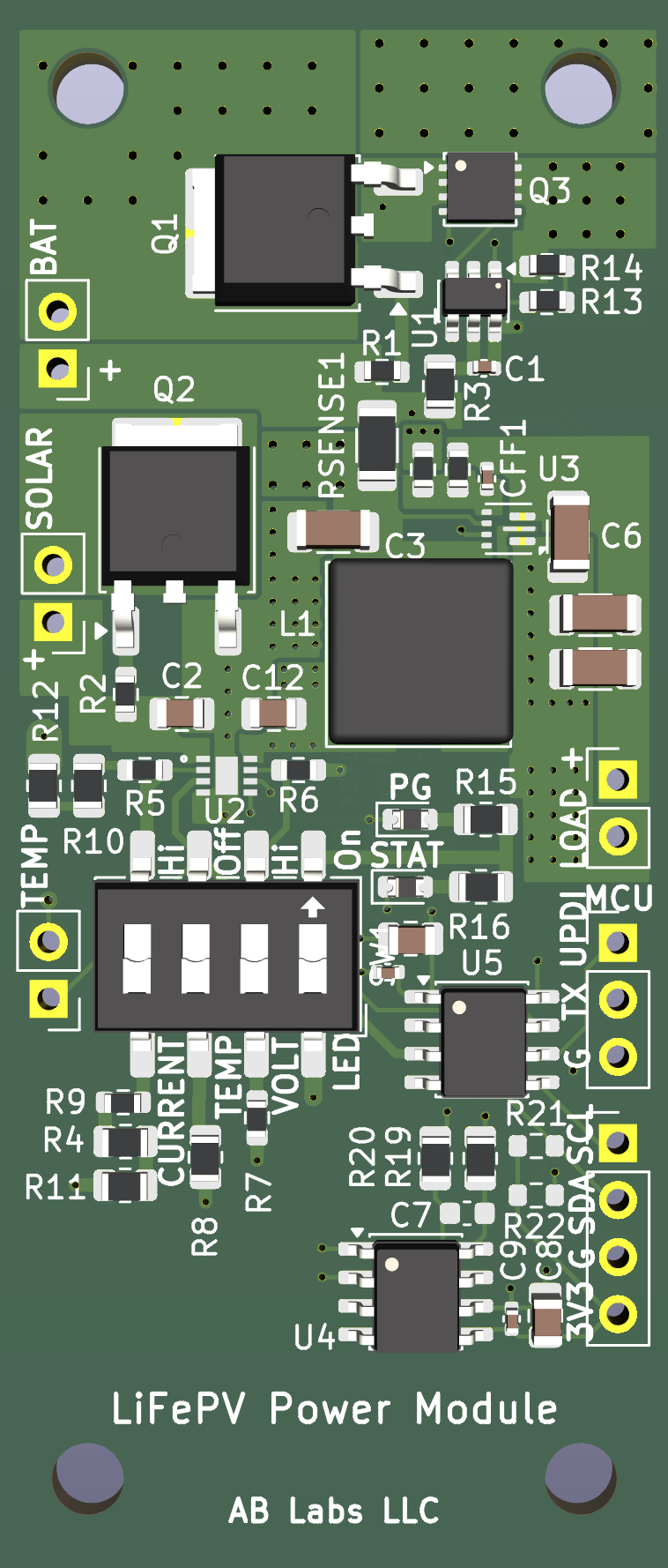
LiFePV Power Module prototype PCB, a compact green circuit board with a four-position DIP switch, screw terminals for solar, battery, load, and temperature sensor, and status LEDs labeled PG and STAT.

Prototype board, current revision.

LiFePO₄ Battery chemistry
3.6 V Outputs 3.6 volts to be compatible with systems that accept a standard 3.6 volt lithium battery
< 1 mA Prototype board consumption
V / I Remote battery voltage & current telemetry

Prototype measurement. Final specification subject to validation.

Battery protection

A dedicated protection IC guards against over-charging or over-discharging the battery.

Reverse-polarity protection

Battery and solar inputs tolerate accidental reverse connection.

Independent fuse

A physical fuse adds a secondary current-interruption layer.

Temperature monitoring

A battery thermistor measures the temperature and slows and suspends charging outside the battery's operational range.

Integrated Ultra Low-Power MCU

An MCU monitors the charging process and intervenes to reduce battery cycling and enforce a charging safety timer.

Configurable charging

Charge voltage and current are switch-selectable to match your battery. Slow-charging and under-charging are available to increase the safety margin in low-power applications.

Remote charging telemetry

An integrated INA219 voltage and current sensor tells you when your battery is charging and discharging. It can be queried remotely over Meshtastic or MeshCore or easily integrated into your custom project.

Designed for Solar

The charging circuit implements fixed-point MPPT, automatically reducing its current draw as the panel voltage falls, allowing the charger to continue operating effectively as sunlight and available solar power change.

Currently in testing.

Prototypes have been built and are being tested in the field. What we learn will shape the final design before it goes into production.

  • Circuit design
  • Component selection
  • Layout
  • Prototype fabrication
  • Validation and field testing
  • Final revision
  • Production batch
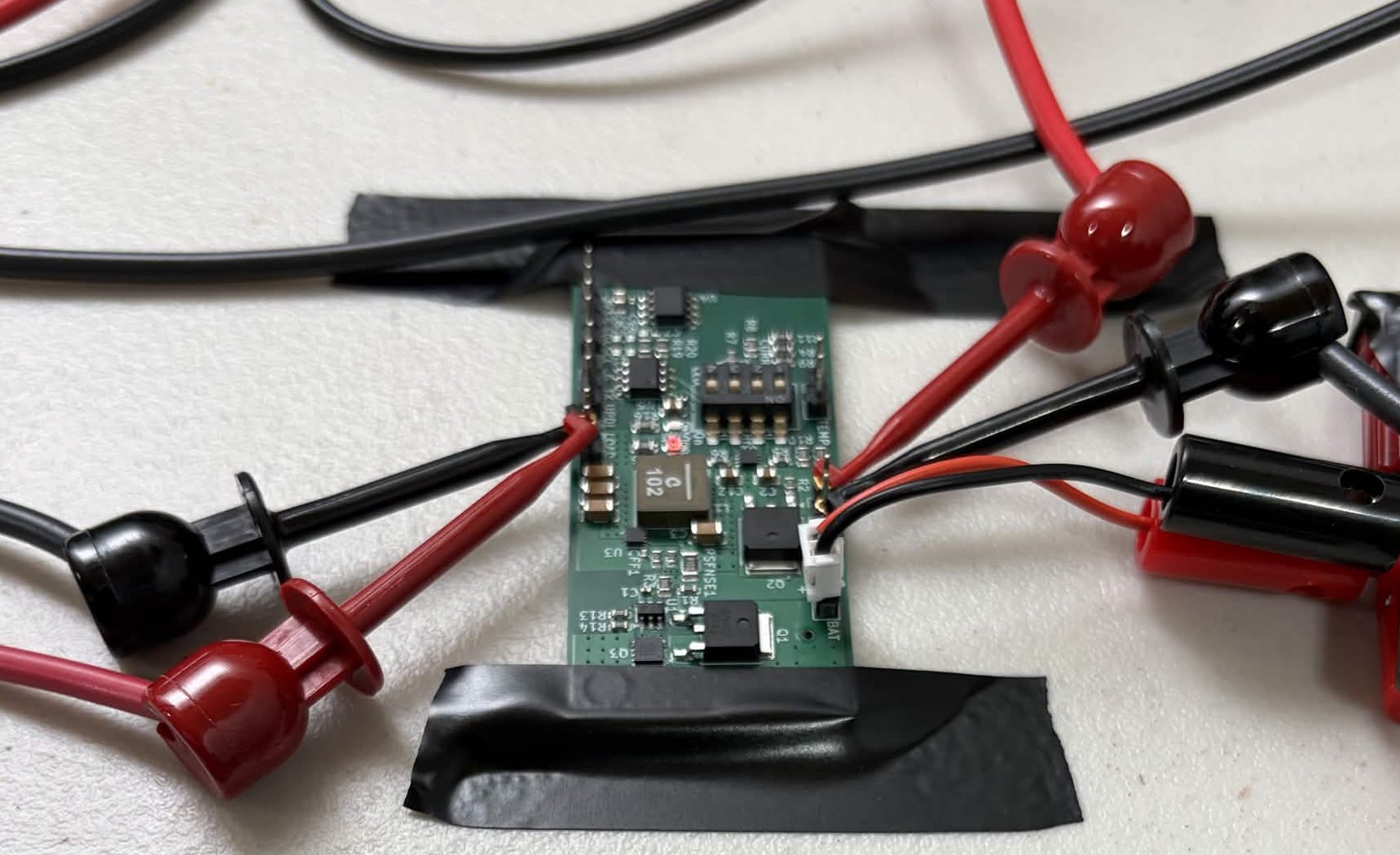
A LiFePV Power Module prototype on a workbench, connected to multimeter probes for testing.
Bench testing a prototype board.
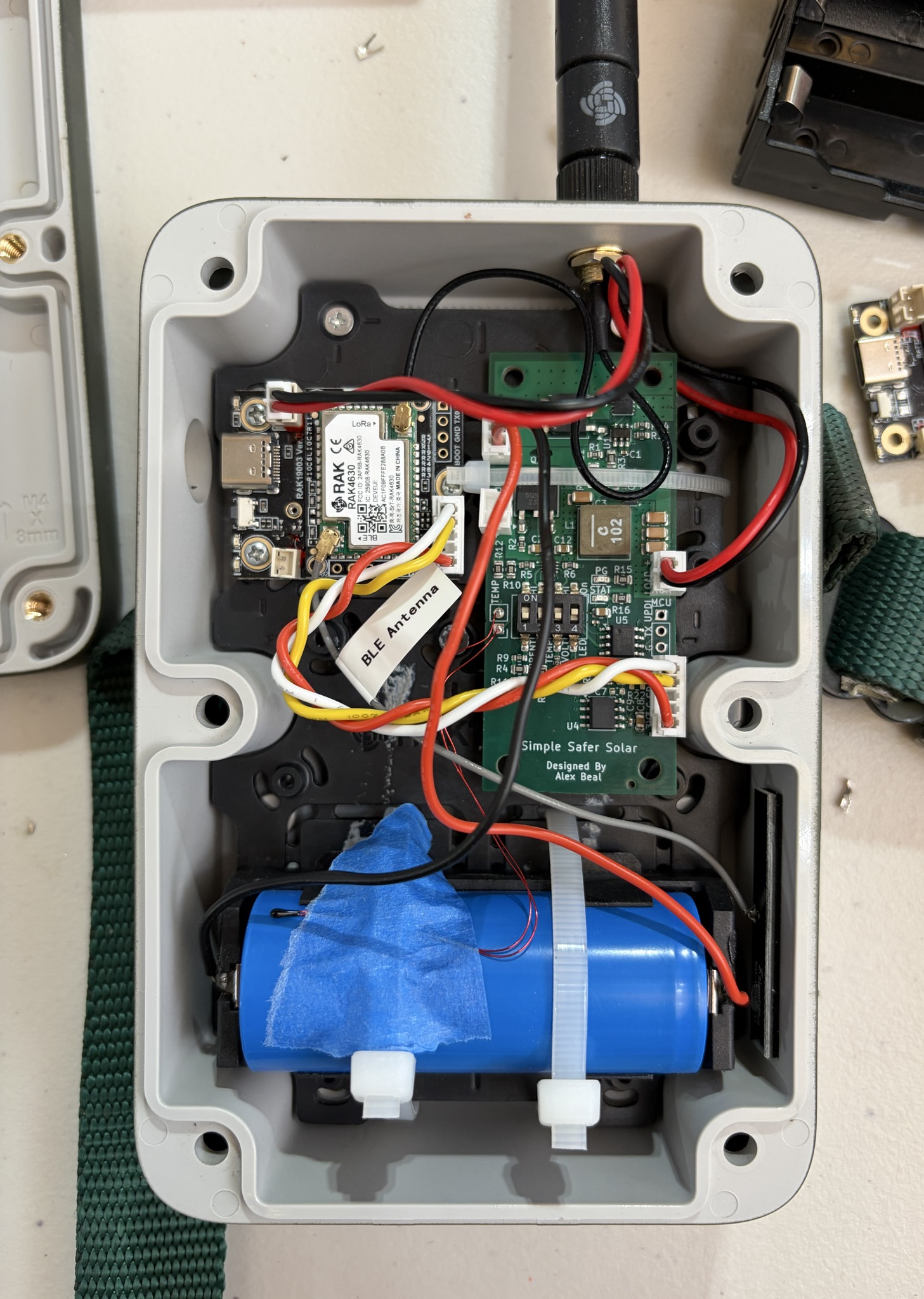
A LiFePV Power Module prototype wired into a weatherproof enclosure alongside a RAK4630 LoRa board, battery, and antenna for field testing.
Field-testing a prototype in an enclosure.